
Keeping the lights on is important. Power cuts don’t just interrupt your business; they can also damage your electronics or wipe out hours of work. As a result, researching backups like an uninterruptible power supply is often a smart idea.
But that raises the question: should you use an inverter or UPS? Some people use the terms interchangeably, but they operate very differently. And you need to know the difference before you start looking.
What Is a UPS?
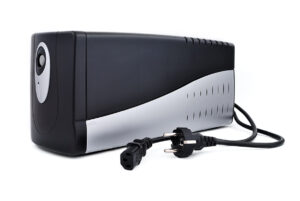 An uninterrupted power supply (UPS) keeps the power running. It sits between your computer or router and the outlet, so when there’s an outage, you don’t even notice a flicker. The power supply switches over automatically.
This seamless response is useful because it gives you time to save your files and shut down safely.
But understanding a UPS system’s limitations is important. Standard models last 10 minutes to about an hour, meaning they’re only good for short bursts of power. It’s enough to protect your data, but not much else.
How Does a UPS Work?
UPS devices have a small internal battery that charges when the power flows. They feature automatic power switching, which means the battery kicks in as soon as the power from the wall stops. Your systems don’t register a difference and continue operating as normal.
This speed is critical in environments where even a second of downtime matters. Offices, point-of-sale devices, and servers all benefit from that level of reliability.
A UPS monitors the power supply and absorbs spikes, so it has a protective function rather than being a pure power backup system. The voltage fluctuation protection is why so many business owners choose these systems.
Still, the battery backup time is limited. Once your battery is dead, your devices will turn off unless you have another power source.
What Is an Inverter?
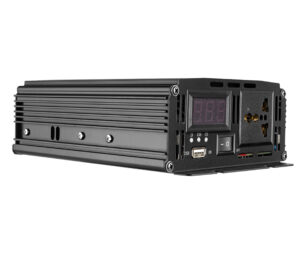 An inverter also has a battery backup, but it converts stored DC power into AC electricity that your devices can use. Instead of bridging a short gap, it keeps supplying power for as long as the battery lasts.
This makes it a practical power backup system for businesses. You can run lights, fans, or even small appliances like point-of-sale units. You’ll be able to run your business almost like normal, which is useful during longer outages.
Some setups include features like load management, which helps prioritize essential devices while turning off non-essential ones.
How Does an Inverter Work?
Inverter systems rely on an external battery, which charges when the power’s on. When the electricity drops, your inverter kicks in and starts converting that stored energy and feeding it to your appliances.
The switch happens quickly, but not instantly. The slight pause as the changeover happens means that the lights might flicker or electronics might reboot. That won’t make a difference to most appliances, but it will affect computers and servers.
Higher-end models, such as a pure sine wave inverter, produce cleaner and more stable power. This makes them better suited for sensitive electronics compared to the basic types.
Key Differences Between an Inverter and UPS
The biggest difference between UPS systems and inverters comes down to purpose.
A UPS focuses on protection and precision. It reacts instantly, prevents disruption, and shields devices from unstable power. It works best for computers, servers, and equipment that cannot afford even a moment of downtime.
An inverter focuses on endurance. It keeps power flowing for longer periods, making it ideal for running appliances and other business essentials during extended outages.
There’s also a difference in setup. A UPS is simple and compact. It plugs directly into the devices you want to protect. An inverter requires more planning, connecting to batteries and sometimes to selected circuits within a property.
Cost plays a role as well. A UPS is usually more affordable for short-term backup. An inverter may cost more upfront but delivers longer use when paired with the right battery capacity.
Choosing the Right Option
UPS or an inverter; which one is best for your business? Some setups combine both. A UPS handles critical electronics, while an inverter powers the rest of the space. That approach covers both short interruptions and longer outages without compromise.
Nite and Day Power is your supplier of UPS services in Northern California. Call us today at 800-540-7693 for more information on how a UPS works.
