
When shopping for an uninterruptible power supply for your business, one of your biggest decisions stems from choosing between a single-phase UPS vs. three-phase UPS. Understanding the difference and how it affects your needs requires looking beyond the technical specifications and aligning the power supply service with your facility’s real demands. Get it right, and your equipment stays protected. Get it wrong, and you could end up overpaying for capacity you will never use, or worse, underpowering a critical operation.
Understanding UPS Systems and Why Your Business Needs One
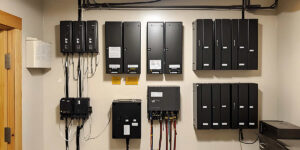 Even short power outages can mean lost revenue, damaged equipment, and disrupted operations. This makes understanding UPS systems an important part of business continuity planning.
A UPS system keeps equipment running when the utility power fails or can’t handle demand. This buffer between the grid and everything plugged into your building provides temporary backup power. It gives equipment enough time to shut down safely or continue operating until a generator kicks on.
Inside every UPS system, you’ll find a battery bank, an inverter, and a set of circuits designed to manage the flow of electricity. The big differences between single-phase and three-phase models are how they deliver electricity to your equipment and how much of it can flow at once.
What Is Single-Phase Power?
Single-phase power systems deliver power using a single alternating current waveform. The voltage rises and falls in a continuous cycle, easily handling lighter loads such as computers and basic networking equipment.
Most single-phase UPS systems accommodate loads up to around 20 kVA, which covers a lot of ground for smaller commercial environments. For businesses with moderate electrical load requirements, such as a small office with a server closet or a retail space with point-of-sale systems, these systems are usually adequate. They’re also more affordable and easier to install than a three-phase power system.
However, single-phase systems can’t support heavy machinery or large-scale infrastructure. And, as electrical demand grows, the performance of single-phase UPS vs. three-phase can suffer.
What Is Three-Phase Power?
Three-phase power uses three separate electrical waves, so it can handle a much higher load and deliver electricity more smoothly and consistently. These systems distribute the current more evenly across circuits, reducing heat and wear on the wiring and equipment.
Three-phase UPS systems often start at 10 to 15 kVA and scale into the hundreds of kilowatts. Power supply reliability at that scale depends on sufficient electrical load capacity; otherwise, it can lead to voltage imbalances and excessive heat.
Three-phase UPS systems are commonly used in environments that require higher electrical load capacity and stable power around the clock, like:
- Data centers
- Manufacturing facilities
- Hospitals
- Large office buildings
- Warehouses
Distributing the load across three phases keeps power delivery balanced. Equipment experiences less stress, and systems often operate more efficiently. That improved power supply reliability is one reason many growing businesses move toward three-phase infrastructure.
A Side-by-Side Comparison of Single-Phase UPS vs. Three-Phase Power Systems
When evaluating a single-phase UPS vs. a three-phase UPS, several factors stand out.
- Load Capacity: Single-phase units typically top out around 20 kVA. Three-phase systems start there and go much higher, making them the right fit for heavy commercial or industrial use.
- Power Quality: Three-phase power delivers a steadier current, reducing stress on sensitive electronics over time.
- Installation Cost: Single-phase systems are less expensive to buy and install. Three-phase systems require more complex wiring but offer better long-term value for high-demand facilities.
- Scalability: Three-phase UPS designs are easier to scale. Many modular configurations allow businesses to add capacity as their power needs grow.
Where Power Distribution Units Fit In
Choosing the right UPS often goes hand in hand with choosing the right PDU. A power distribution unit (PDU) helps distribute electrical power from a UPS to connected equipment. This becomes especially important in three-phase environments, where load balancing can improve performance and prevent overload conditions.
Protect Your Business With Nite and Day Power
Sorting through single-phase UPS vs. three-phase power supply options is easier with a knowledgeable partner. Whether you’re looking at a basic office backup system or a full 3-phase UPS for commercial use, the team at Nite and Day Power helps you select the right system.
Give them a call today at (800) 540-7693 to get started.
