
What are the roles of commercial power conditioning versus surge protection in your electrical system? Both help shield your sensitive appliances, but they do so in distinctly different ways.
As a long-standing uninterruptible power supply service, we at Nite and Day Power answer questions like yours on a regular basis. Read on as we lend some insight.
What Is a Surge Protector?
A spike is a high-voltage transient or impulse that can damage sensitive electronic systems, and surge protectors (also known as surge diverters) use transient voltage suppression to safely redirect excess current away from them.
Surge protectors typically use the following parts to perform this function:
- Silicon avalanche diodes (SADs): SADs use solid-state p-n junctions to provide speedy and precise voltage clamping for sensitive data lines but have a lower overall surge energy capacity.
- Metal oxide varistors (MOVs): As the name suggests, MOVs consist of a variable-resistance ceramic material (mainly zinc oxide) placed between the power and ground lines. They protect electronics by dropping their resistance when voltage spikes.
- Gas discharge tubes (GDTs): GDTs are the slowest to react but possess the strongest energy capacity, so they excel at diverting very high surge currents.
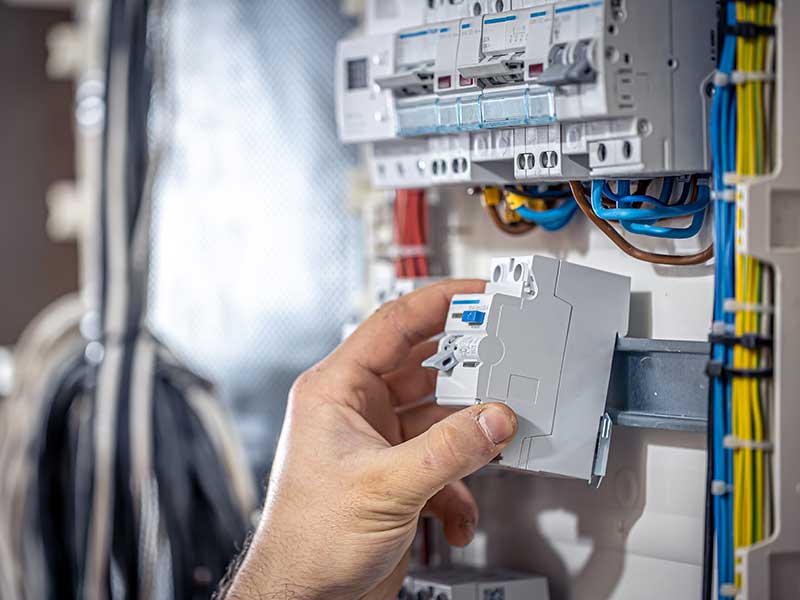
A point-of-use surge protector power strip is more affordable but only protects the electronic devices plugged directly into its outlets. If you want something more comprehensive, a whole-home surge protector is the better option. It sits on or near the main electrical panel to intercept and clamp high-voltage spikes before they enter your property’s circuits.
What About Commercial Power Conditioners?
The key difference between commercial power conditioning and surge protection lies in how each handles electrical disturbances.
While a standard surge protector acts like a “basic safety valve” against power surges, a power conditioner is an advanced, multi-stage filtration system that constantly refines your electricity through processes like electrical noise filtering. Many businesses that operate with sensitive appliances, like those in the medical or industrial sectors, invest in power conditioners.
Let’s take a look at their common components:
- Capacitors and inductors: These filters block and absorb high-frequency electrical noise (EMI/RFI) that can cause annoying hums in audio gear or glitches in computers.
- Automatic voltage regulators (AVR): AVRs keep the output steady at a safe level by adjusting voltage up or down when the grid dips (brownouts) or surges slightly.
- Isolation transformers: Found in higher-end models, these physically separate the input power from the output power using magnetic fields, helping reduce ground loops and noise.
- Surge protectors: Many units include built-in surge protection that works alongside dedicated surge protection devices as an extra layer of defense if the latter falls short.
Which One Does Your Property Need?
If you’re having trouble picking commercial power conditioning versus surge protection, here’s a quick comparison for your convenience.
| Consideration | Surge Protection | Power Conditioning |
|---|---|---|
| Primary purpose | Protects against sudden voltage spikes | Improves the quality and stability of incoming power |
| Best for | Properties vulnerable to lightning-induced surges or electrical switching transients | Properties with recurring voltage fluctuations or electrical interference |
| Common applications | Office computers, appliances, HVAC controls, and networking equipment | Medical equipment, audio systems, laboratory instruments, and sensitive electronics |
| Installation options | Electrical panels and individual outlets | Individual equipment, dedicated circuits, or centralized systems |
| Relative cost | Generally more affordable, although whole-home models can get pricey | Typically more expensive, depending on features and capacity |
| Main limitation | Doesn’t correct sustained voltage problems or supply backup power | Not every model regulates voltage or provides adequate surge protection |
Don’t Forget About Uninterruptible Power Supplies
Power conditioners and surge protectors share one crucial limitation: Neither can keep your appliances running during a complete power outage. What happens when the electricity suddenly goes out?
That’s where an uninterruptible power supply (UPS) comes in. It uses stored battery energy to provide temporary backup power when the main supply fails. Depending on the model, a UPS can also regulate voltage and filter electrical disturbances. This improves equipment power reliability and gives your critical systems enough time to shut down safely or stay operational until a generator takes over.
At Nite and Day Power, we help businesses stay prepared with reliable UPS solutions. Contact us today at (800) 540-7693 if you have more questions about commercial power conditioning versus surge protection. We also encourage you to explore more of our blog to learn the difference between a UPS and a surge protector.