
Have you ever wondered how your property’s UPS delivers continuous electricity during an outage? At the heart of its functionality lies the rectifier.
As a long-standing provider of uninterruptible power supply services, our team at Nite and Day Power knows the intricacies of this crucial component. Learn more about the role of a rectifier in UPS systems here.
The Importance of Rectifiers for Reliable Power Backup
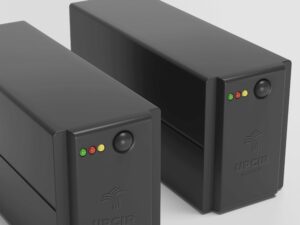 The raw alternating current (AC) from your wall outlet is a two-way street where electricity constantly flips direction. While fine for some appliances, more complex systems require a one-directional stream of power known as direct current (DC). That’s where rectifiers step in as an “electrical gatekeeper.”
Rectifiers use diodes, thyristors, and other heavy-duty semiconductor devices to convert AC power into DC for your UPS. They also play the following roles:
- Maintain battery readiness: The component safely charges a UPS system’s internal batteries with regulated DC power to keep them full when emergencies strike.
- Improve power quality: Many modern rectifiers use active input power factor correction (PFC) to improve the UPS’s energy efficiency while minimizing interference for nearby equipment.
- Support generator operation: Modern rectifier designs can improve compatibility with generators by reducing the UPS’s impact on the generator and accommodating variations in the incoming power.
What Are the Different Types of UPS Rectifiers?
When you’re choosing a UPS for critical facilities, the front-end rectifier plays a massive role in system efficiency and grid compatibility. Below are three common designs of this technology.
6-Pulse
Think of the 6-pulse models as old-school workhorses. They use six basic semiconductor devices to chop up three-phase AC power into DC. You’ll mostly find them in long-running factories, heavy industrial plants, or budget-conscious setups where raw toughness matters more than high-tech refinement.
The advantages of a 6-pulse rectifier in UPS systems include a relatively simple, well-established design and proven reliability in many industrial applications. However, it’s also an incredibly dirty power consumer that can overheat your wiring and mess with nearby equipment.
12-Pulse
The 12-pulse rectifier is a clever engineering upgrade designed to solve the harmonic distortion issues of its predecessor. It typically combines two 6-pulse rectifier bridges with a phase-shifting transformer. This setup splits incoming electricity into two distinct streams that help cancel out certain lower-order harmonics.
This makes it a solid choice for harsh marine environments, oil refineries, and large processing plants that require clean power. The required transformer, however, typically makes 12-pulse units incredibly heavy, physically massive, and quite expensive to buy up front.
Insulated Gate Bipolar Transistor (IGBT)
The IGBT rectifier is a modern, smart choice in today’s tech landscape. Instead of slowly chopping the power like older systems, it uses advanced transistors that switch at a high frequency to actively shape incoming electricity into a cleaner input current waveform.
That’s why IGBTs have become more commonplace in enterprise data centers, modern hospitals, and high-tech facilities where space is tight and efficiency is everything. They can boost power conversion efficiency, minimize harmonic distortion, and work beautifully with backup generators.
What Are the Signs of Rectifier Failure?
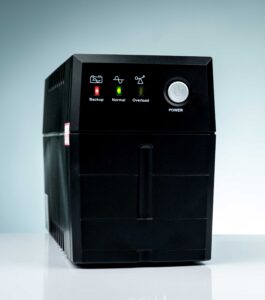 A faulty rectifier in UPS systems can be disastrous during an emergency. Watch out for these possible red flags and bring in a qualified technician the moment you notice them:
- Subpar battery charging: The UPS fails to replenish battery energy or reports extended charge times because the rectifier no longer converts AC to DC power effectively.
- Constant battery operation: The UPS repeatedly switches to battery power even when utility power appears normal.
- Frequent alarm beeps: Depending on your UPS model, it may display rectifier-related fault codes, input-power warnings, or phase-loss alerts.
- Voltage drops: A rectifier problem can cause the UPS’s DC bus voltage to fall below its normal operating range, potentially affecting the inverter and battery charging.
- Total system shutdown: One possible culprit of a UPS turning off or tripping is a serious rectifier fault.
Comprehensive UPS Maintenance
The rectifier in UPS systems is a crucial component that enables AC-to-DC conversion. At Nite and Day Power, we provide UPS maintenance services that cover every part of your setup. We regularly train our team on the latest industry standards and provide flexible terms to meet your unique needs.
Call (800) 540-7693 today or explore our blog to learn more about power factor in UPS systems.
